
Nine years ago, the Timeseries Refinery started as a small library to store versioned time series in postgres. Today we publish version 1.0.0. For the teams who run it in production every day, the number changes nothing: they have trusted the platform for years. For us, it is a way of saying out loud what they already know. The platform is mature, stable and complete enough to carry the label.
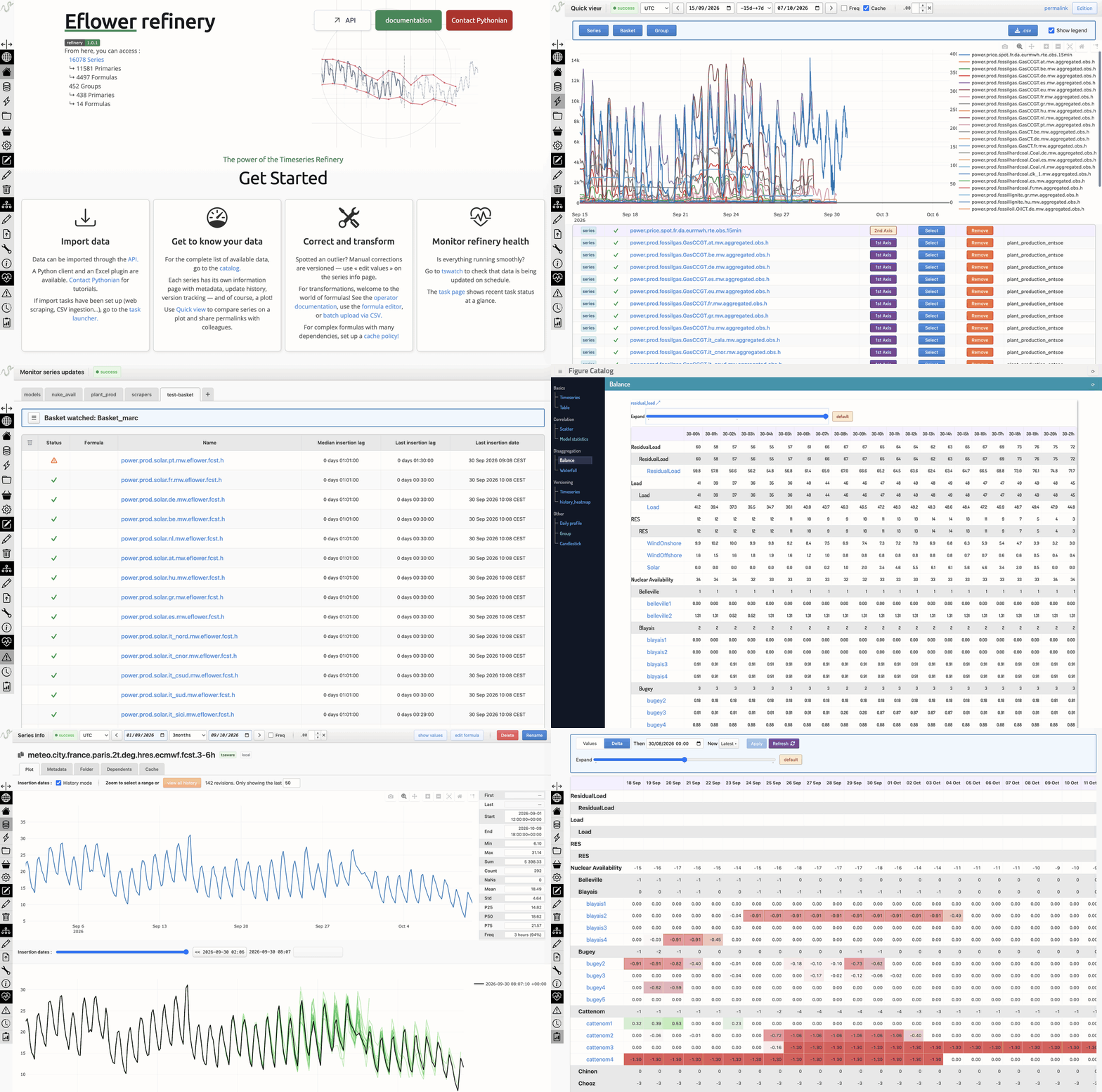
This release is the result of a full year of work, from September 2025 to August 2026. It brings four major pieces, and each of them came out of a conversation with a user.
A second storage backend
Some of our users store hundreds of thousands of series and read them all day long. For them, we built a filesystem storage backend. Each series now chooses where its values live, in postgres or on the filesystem, and both coexist in the same instance. Series can be moved from one backend to the other while the platform keeps running. The result is lower latencies, much faster backups and restores, and a clear path towards very large deployments.
AI assistants, inside the governed perimeter
Over the past months I have shown many people what happens when an AI assistant is connected to the Refinery. The MCP server is now part of the release. An assistant can search the catalog, read and test formulas, analyse dependencies and build dashboards, always under the access rights of the person using it. What makes it work is not the model. It is the data layer underneath: versioned, traceable, with formulas and metadata the assistant can reason about.
Dashboards, rebuilt
The dashboard system has been rebuilt from the ground up. Figures and dashboards are now described in the same language as the formulas, which means they can be versioned, searched and edited like everything else in the platform. There is a new editor with a live preview, a public read-only viewer, and new figure types such as waterfalls and history heatmaps.
A new face
The part you will notice first is the interface. Every page has been redesigned in one consistent style: the catalog, the series editor, the folders, the formula pages, the task manager and the monitoring views. Folders now behave like a real file browser, with drag and drop and batch operations. Small things add up, and the daily experience is simply more pleasant.
What comes next
From now on, we will ship one major release every year. The roadmap is already public, and the full list of changes in 1.0.0, including the formula system, data integrity and authentication improvements, is on our news page.
Request a demo