
Years ago, when I was a portfolio optimiser at a major utility, we faced a regulatory investigation into suspected market abuse.
The incident under scrutiny had happened years before. By then, the Excel workbooks we used to manage positions had been through countless iterations. Versioning was manual — each operator saved a copy with the date. The optimisation model from that period had long been decommissioned.
What followed was brutal: two years of full-time work by several colleagues, just to reconstruct what had happened on a specific date. The case ended with a €1 million fine.
I've thought about that a lot since.
It keeps happening
In November 2025, Spain's regulator CNMC fined Enet Energy €1 million for attempting to manipulate the wholesale gas market. The company had placed large sell orders at very low prices around 17:30 — exactly when reference indices like the PVB price are calculated — then replaced them seconds later with higher-priced orders. Classic false signal. The CNMC found it breached Article 5 of REMIT. It was already the fourth sanction for similar behaviour on the Spanish gas market.
Two cases, years apart, same root problem: when you can't trace what happened in your data, the cost is enormous. In time, money, and credibility.
The infrastructure we built wasn't designed for this
Most energy companies aren't trying to hide anything. But their data infrastructure makes auditability nearly impossible by design.
Excel was never built for versioning. When someone saves "model_v3_final_FINAL_march.xlsx", that's not a version history — that's archaeology waiting to happen. And when a regulator asks what your position was on a specific date two years ago, archaeology is exactly what you're doing.
The problem goes deeper than Excel. Data sits in different systems — a market data feed here, a SCADA system there, a model output in a shared drive somewhere. Nobody documented which version of which formula was running when a specific trade was made. Nobody can easily answer: where did this number come from? What were its inputs? Who changed it, and when?
What it looks like when it's done right
In a well-designed time series platform, every data point carries its history. You can pull up any series and see exactly what value was known at any point in time — not the corrected version, but what the system actually knew then.
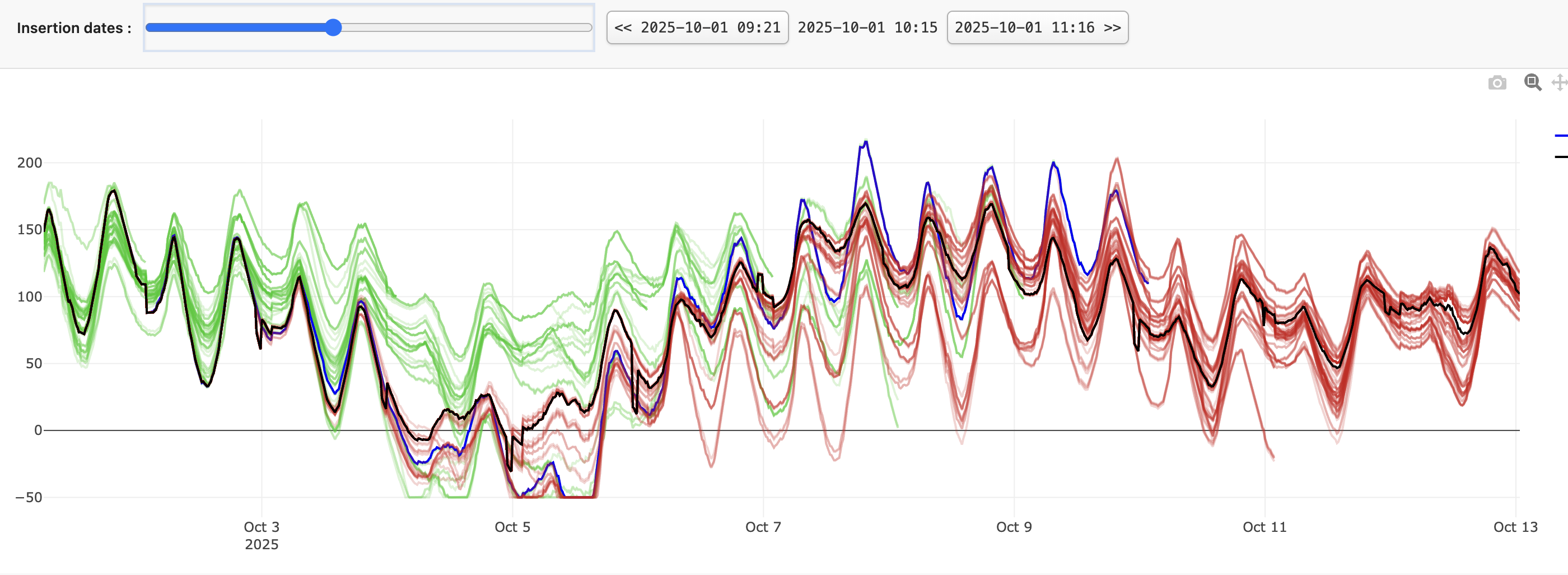
You can trace any computed indicator back through its formula chain, all the way to the primary data sources.
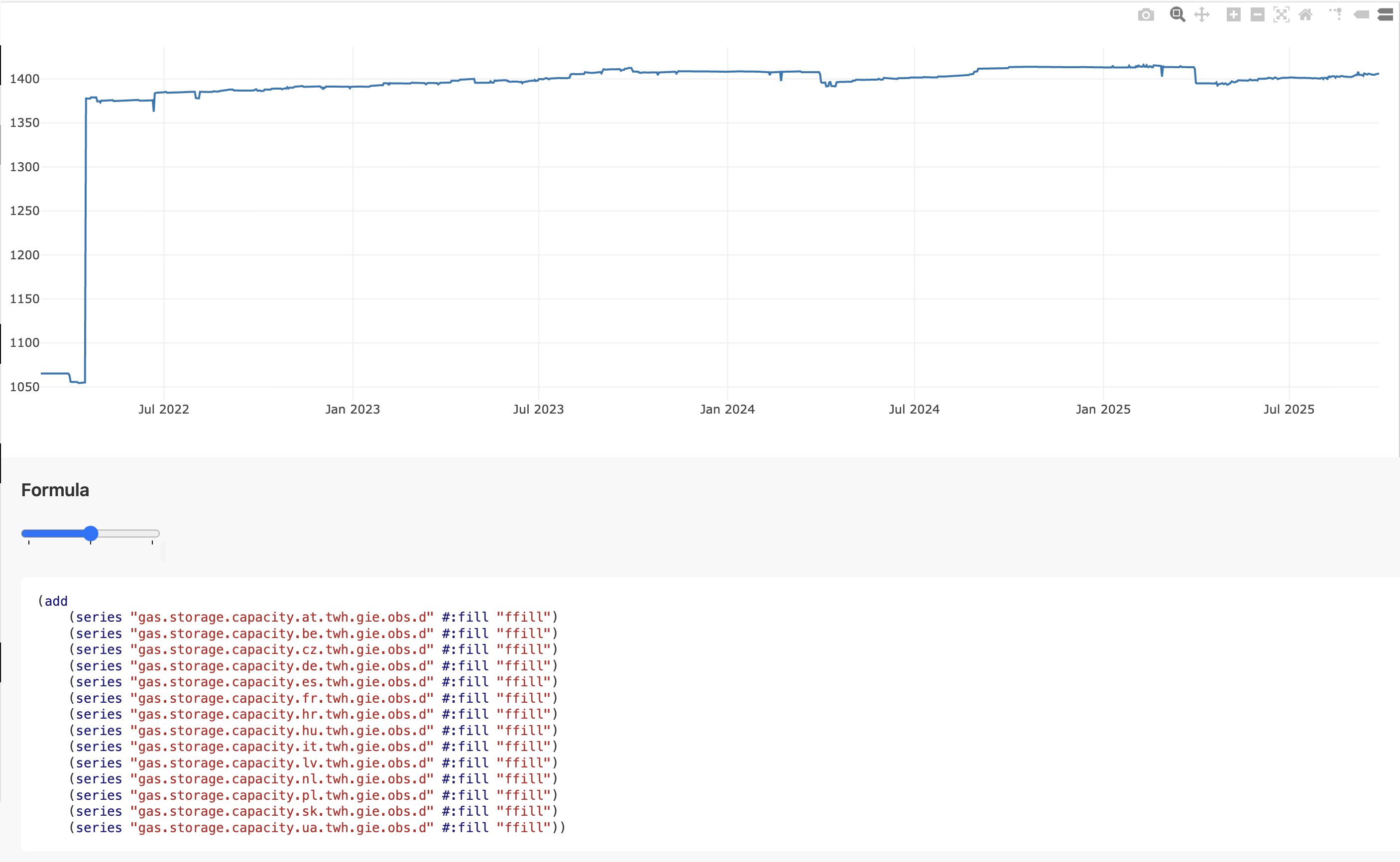
Every modification is logged — who did it, when, and from which system. Not as an afterthought. As the default.
That's the difference between a platform built for auditability and one where auditability was bolted on later.
The regulatory pressure is only going in one direction
REMIT is expanding. National regulators are investing in automated surveillance. Algorithmic and AI-assisted trading are generating patterns that are increasingly hard to reconstruct after the fact.
Digitalization can be part of the problem — or part of the solution, depending entirely on whether the data layer underneath was designed for transparency.
The €1M fine at my former employer and the €1M fine against Enet Energy are not anomalies. They're warnings.
In today's energy markets, traceability isn't a compliance checkbox. It's what protects you when things go wrong — and sooner or later, something always does.
If your team would struggle to reconstruct what happened in your data last year, let's talk.
Request a demo