
Battery storage has never looked more attractive. Falling costs, rising volatility, regulatory support — the case for investing seems obvious.
Until you start building the business case.
The revenue of a battery doesn't come from one market. It comes from stacking multiple streams simultaneously: Day-Ahead, Intraday, balancing, aFRR, FCR, local purchase contracts. Each with its own rules, constraints, and uncertainties. Each assumption you make about one market interacts with all the others.
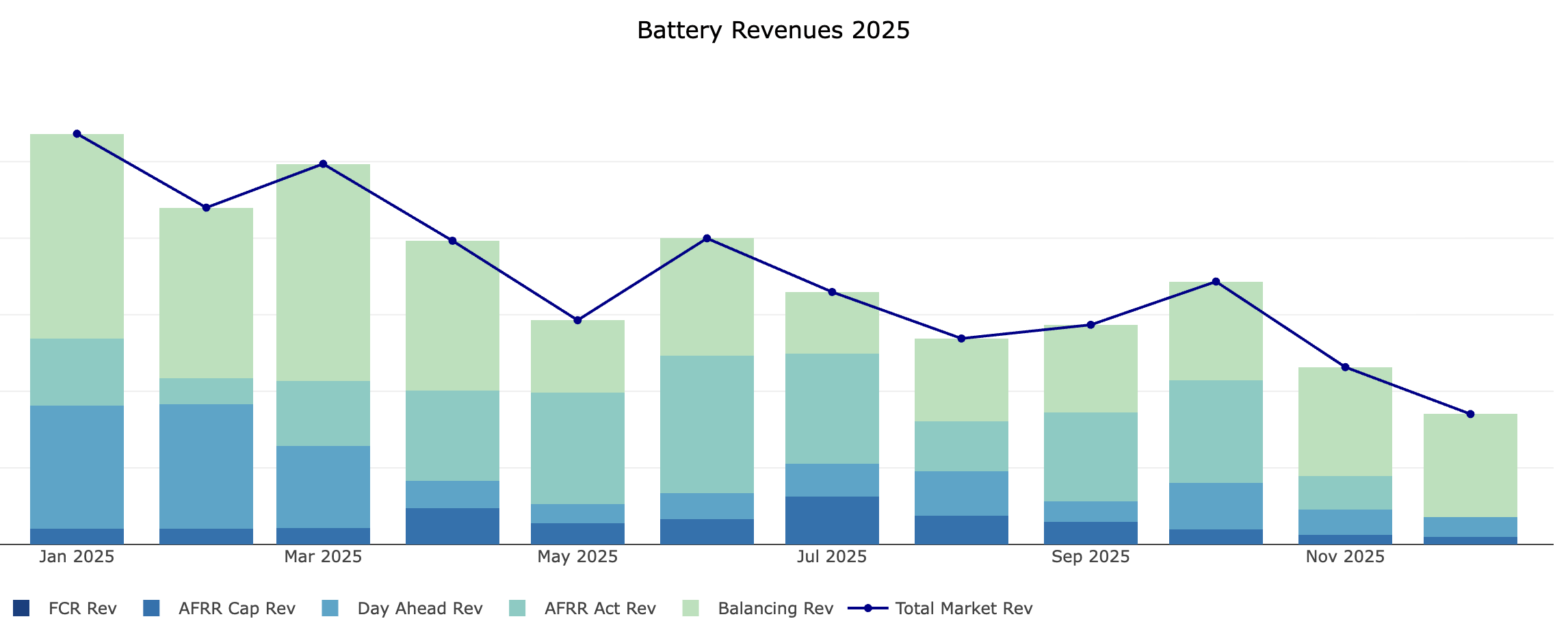
A small error in your capacity degradation model, a wrong assumption about FCR availability, an optimistic view of aFRR activation rates — and your IRR moves from attractive to marginal. The investment still gets made. The return doesn't materialise.
This is what we built our battery optimisation model for. Not to give a definitive answer, but to let developers and industrial players stress-test their assumptions quickly — across market layers, against different price scenarios, with their own technical constraints plugged in.
The smartest investors we work with don't use it to get a number. They use it to understand which assumptions their business case is most sensitive to. That's a different — and more valuable — question.
Battery storage is becoming the backbone of flexibility in the energy transition. Getting the model right before you commit is what separates a good investment from an expensive lesson.
Request a demo